The electronic Public Distribution System of Andhra Pradesh (ePDS AP) serves as a critical institutional framework designed to ensure food security, stabilize commodity prices, and provide targeted social safety nets for vulnerable populations. In a state with significant poverty and agricultural reliance, the administration of this system is governed by the Department of Consumer Affairs, Food and Civil Supplies and executed operationally by the Andhra Pradesh State Civil Supplies Corporation Limited (APSCSCL).
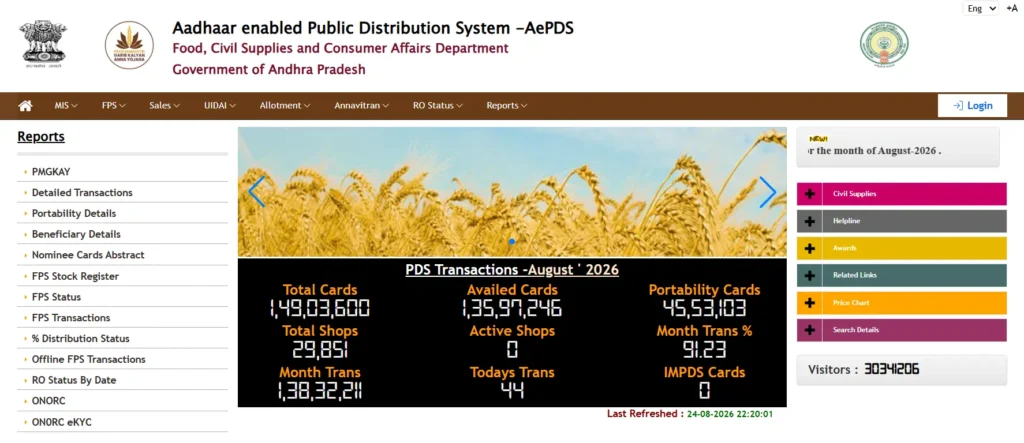
What is the ePDS AP (electronic Public Distribution System)?
The electronic Public Distribution System of Andhra Pradesh (ePDS AP) is a highly digitized network that manages the flow of essential commodities from procurement to retail distribution. At the helm of its operations is the Andhra Pradesh State Civil Supplies Corporation Limited (APSCSCL), which was incorporated in 1974 as a fully state-owned limited company. While it was originally established as a regulatory body, APSCSCL has evolved over five decades into a complex supply chain and logistics manager. Its vast mandate includes purchasing paddy from farmers, supervising Custom Milling Rice (CMR) operations, maintaining state-of-the-art storage infrastructures, and regulating the distribution of essential commodities through a massive network of retail outlets.
The entire system relies on automated transactions via electronic Point of Sale (ePoS) cum electronic weighing machines who are having computerized BPL Ration cards. In recent years, Andhra Pradesh has transitioned to smart, digitally-enabled ration cards, commonly referred to as Rice Cards. These cards feature embedded QR codes that facilitate real-time biometric and electronic verification, ensuring that subsidies reach the intended beneficiaries and reducing systemic grain leakage.
Decentralized Procurement (DCP) & Rural Trust
Andhra Pradesh operates as a Decentralized Procurement (DCP) state under the guidelines of the Government of India. This means that the state government assumes direct responsibility for purchasing paddy and coarse grains at the Minimum Support Price (MSP). Procurement is managed at the grassroots level by Paddy Purchase Centers (PPCs) run by Primary Agricultural Cooperative Societies (PACS), Farmer Producer Organizations (FPOs), and Agricultural Market Committees (AMCs). Once purchased, the paddy is tracked digitally and routed to contracted local rice mills. The resulting Custom Milled Rice (CMR) is utilized for the state’s internal welfare schemes, and any surplus stock is handed over to the Food Corporation of India (FCI) for the national pool.
To build trust and support the liquidity of the agricultural sector, the state government enforces a strict policy mandating that full payment for procured paddy be credited directly to the farmers’ bank accounts within 24 to 48 hours. This flagship reform represents a major shift from chronic payment delays experienced in the past. To demonstrate its commitment to this policy, the administration recently cleared ₹1,674 crore in outstanding procurement arrears inherited from the previous government, directly benefiting 84,724 farmers.
Additionally, administrative reforms have ended the controversial mandatory randomization of rice mills, allowing farmers to choose their preferred local and nearest mill. Furthermore, an innovative WhatsApp-based procurement system has been deployed, enabling over 17,000 registered farmers to schedule their grain sales directly from their mobile phones.
Types of Ration Cards Issued Under ePDS AP
Andhra Pradesh’s digitized database contains approximately 1.49 crore active ration cards. This vast database is segmented into distinct card classifications based on household income, asset ownership, and specific social vulnerabilities. Each card type carries its own commodity allocation profile and pricing schedule designed to align with the National Food Security Act (NFSA) of 2013:
| Card Type | Eligible Demographics | Primary Monthly Benefit | Pricing Schedule |
|---|---|---|---|
| White Ration Card / Rice Card (PHH) | Low-income families meeting NFSA priority criteria. Annual income limit of ₹1.20 Lakh in rural areas and ₹1.44 Lakh in urban areas. | 5 kg of rice per head per month. | Provided at ₹1 per kg (often free of cost under current subsidies). |
| Antyodaya Anna Yojana (AAY) Card | Poorest of the poor (e.g., landless agricultural laborers, rural artisans, widows, and disabled individuals). | 35 kg of rice per family per month. | Distributed entirely free of cost under integrated state welfare programs. |
| Annapurna Card | Indigent senior citizens eligible for national old-age pensions but left uncovered. | 10 kg of rice per month. | Issued entirely free of cost to verified cardholders. |
| Pink Ration Card (Non-Priority / APL) | Families above the poverty line (APL) who do not qualify for subsidies. | No subsidized grain allocation. | Standard market pricing applies. Served primarily for identification and address proof. |
In addition to rice, the ePDS AP system coordinates the distribution of other subsidized essential commodities, including wheat, sugar (0.5 kg for standard PDS, 1 kg for AAY cards), red gram dal (1 kg per card, priced at ₹67/kg at state stores), Palmolive cooking oil, and fortified wheat flour (atta).
State Welfare Integration: Mid-Day Meals & Deepam 2.0
The digital infrastructure of the ePDS AP is heavily integrated with other flagship state welfare programs to maximize social outcomes:
- Dokka Seethamma Mid-Day Meal Scheme: The Civil Supplies Department supplies fine-quality, fortified rice (Sanna Biyyam), jaggery, and ragi powder to approximately 41,000 public schools and 4,000 welfare hostels. This initiative directly addresses complaints regarding the poor quality of coarse rice previously distributed. To combat malnutrition, every 25 kg sack is blended with 500 grams of fortified rice enriched with iron, folic acid, and Vitamin B12. Every sack features a unique QR code, enabling school principals to log inventory and provide real-time quality ratings via a specialized mobile application.
- Deepam 2.0 LPG Scheme: To promote clean cooking energy, the state coordinates the distribution of three free LPG cylinders annually to eligible BPL households. The government backs cylinder deposits of ₹1,450 and regulator deposits of ₹150. In remote tribal agency areas, a specialized “Tribal LPG Package” is implemented, providing free 5 kg cylinders and refills directly to Adivasi families.
- Take Home Ration (THR) & ICDS: The department distributes fortified rice, red gram dal, and Palmolive oil to pregnant women, lactating mothers, and children under the age of six through a network of Anganwadi Centers (AWCs).
ePDS AP Ration Card Status Check Online
Whether you have applied for a new card or requested modifications to an existing one, the state government provides an online status-tracking system that ensures transparency and reduces administrative delays.
Step-by-Step Status Verification via the AePDS Portal:
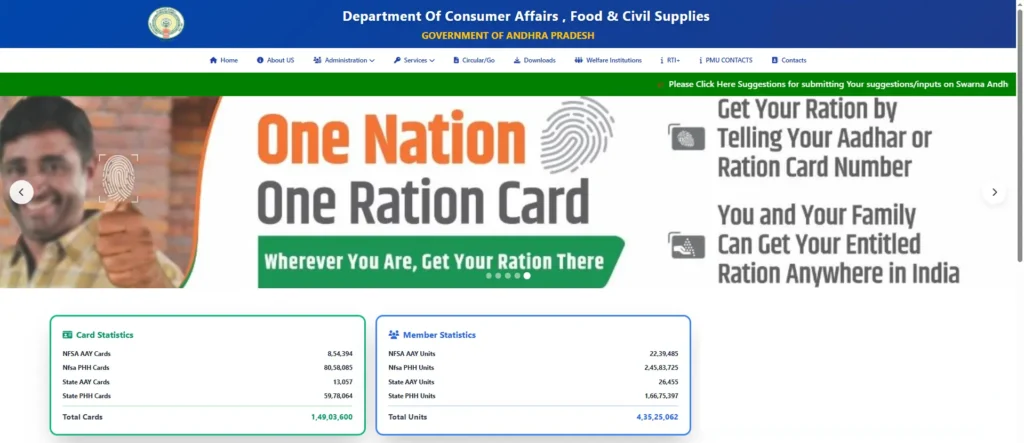
- Visit the Official Portal: Navigate to the official website of the Andhra Pradesh Food & Civil Supplies Department (civilsupplies.ap.gov.in).
- Access AePDS: Under the list of “Useful Links,” hover over the “AePDS” option and click on “ePDS”.
- Go to the Dashboard: On the newly opened ePDS window, select the “Dashboard” tab located on the top menu bar.
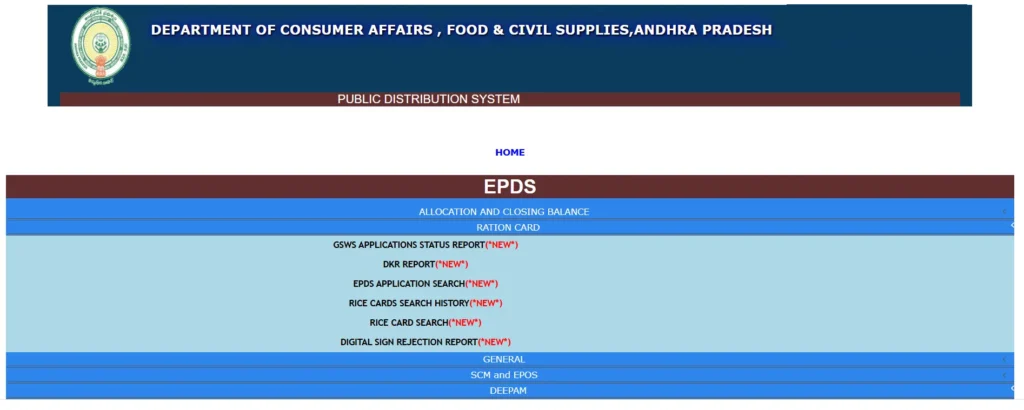
- Launch Application Search: Locate the “Ration Card” dropdown menu and click on “EPDS Application Search”.
- Submit Query: Enter your unique Application ID (or Aadhaar number), input the correct verification CAPTCHA, and click “Submit”.
- Interpret the Result: The portal will instantly display your card status, showing whether your application is “Active,” “Pending,” or “Under Verification”.
Additionally, for newly submitted applications, you can track their real-time progress via the official AP Seva Portal (vswsonline.ap.gov.in) under the “Service Request Status Check”. Inputting your “T” prefixed transaction number displays the exact handling officer, the current stage of verification, and the estimated days remaining for final approval.
The ePDS AP Six-Step Field Verification Workflow
Applicants often ask why new card approvals take between 15 to 30 working days. To eliminate duplicate cards and target welfare precisely, every application must undergo a strict, six-step verification process before card generation:
- System Ingestion and Triangulation: The application data is uploaded via MeeSeva or the secretariat, generating a “T” prefixed transaction ID. The database automatically cross-references land registry records, income tax databases, and electricity consumption profiles to identify immediate exclusion triggers.
- Village Revenue Officer (VRO) Field Audit: The VRO conducts a physical on-site audit of the applicant’s residence to verify family structure, income, and assets.
- Tahsildar Administrative Check: The Tahsildar reviews the VRO’s field report against eligibility criteria (monthly income under ₹10,000 in rural or ₹12,000 in urban areas, land ownership under 10 acres wet or 25 acres dry, and monthly power consumption below 300 units).
- Circle Supply Officer (CSO) Mapping: The CSO maps the approved household to the nearest Fair Price Shop based on geographical proximity.
- District Supply Manager (DSM) Deduplication: The DSM runs a final query in the district database to confirm that none of the family members are linked to any other active card.
- Card Generation and Smart Issuance: The central database generates an active Rice Card with a printed QR code, which is then laminated and delivered.
Step-by-Step: ePDS AP Ration Card Download
Eligible residents can access and download their certified digital ration cards (Rice Cards) in PDF format through three officially authorized platforms. The downloaded PDF is legally valid for obtaining subsidized food grains and serves as accepted identity and address proof.
Method 1: Download via the Official ePDS AP Portal
- Access the official civil supplies portal at epds.ap.gov.in.
- Navigate to “Ration Card Services” or the “Print Ration Card” option on the homepage.
- Enter your 12-digit Aadhaar number or Rice Card number.
- The system will send a One-Time Password (OTP) to your registered, Aadhaar-linked mobile number.
- Input the OTP, click “Print” or “Download,” and save the generated PDF copy to your device.
Method 2: DigiLocker Integration (Highly Recommended)
- Download the DigiLocker mobile application or visit the official website at digilocker.gov.in.
- Sign in using your Aadhaar number and OTP verification.
- Navigate to the search bar, search for “Ration Card,” and select “Food and Civil Supplies Department, Andhra Pradesh”.
- Select the “Ration Card” document service.
- Enter your Ration Card Number and select your respective District.
- Click “Get Document”; the system will fetch the authenticated PDF and save it in your “Issued Documents” section for permanent access.
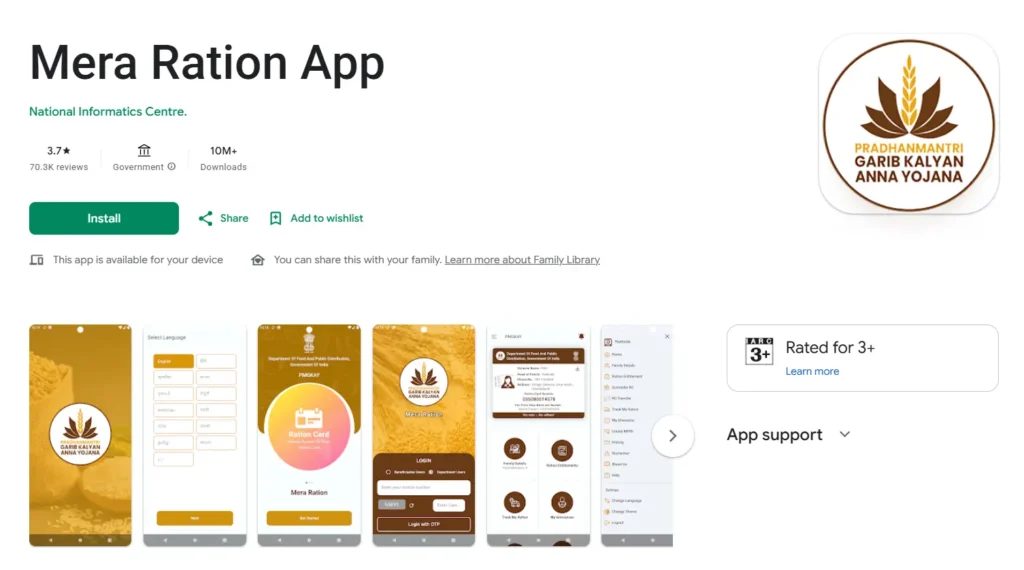
Method 3: Mera Ration Mobile App
- Install the Mera Ration app from the Google Play Store.
- Register and log in using your Aadhaar-linked mobile number.
- Go to the “Ration Card Details” section and enter your Aadhaar number.
- Verify the details via OTP and click “Download” to save the e-card PDF.
Note: For individuals facing biometric or connectivity issues online, the state provides an offline route. You can visit your local Grama Sachivalayam or Ward Secretariat, where a Digital Assistant can verify your status, check eKYC, and print/laminate a physical copy.
ePDS AP Modifications: Member Addition, Deletion & Name Change
Updating your ration card details to reflect family changes (such as marriage, births, or deaths) is managed through the MeeSeva Portal (onlineap.meeseva.gov.in) or your local Secretariat.
Scrapping of the Marriage Certificate Requirement (2025 Reform)
In a major policy relief announced by Civil Supplies Minister Nadendla Manohar, the state government officially scrapped the mandatory requirement of submitting a marriage certificate, wedding card, or wedding photographs when adding a spouse or splitting a card. Historically, rural families struggled to furnish formal marriage documentation, cutting off newly married couples from food security benefits. Under the new directive, VROs must accept applications without these documents, and in cases of genuine doubt, perform an on-site field verification to confirm the marriage.
Member Addition (Newborn / Spouse)
- Log in to the MeeSeva Citizen Portal (onlineap.meeseva.gov.in).
- Select the “Member Addition in Ration Card” service.
- Enter the new member’s details, including full name, Aadhaar number, and relationship to the head of household.
- Upload the newborn’s birth certificate or the spouse’s Aadhaar card and joint address proof.
- Submit the form and record your reference number. The administrative processing limit for member addition is 21 days.
Member Deletion (Migration / Death)
- Access the MeeSeva Portal and select “Deletion of Member/Migration of Member in Ration Card”.
- Enter the details of the individual to be removed.
- Upload the required death certificate (for deceased members) or migration/separation proof.
- Submit and track via your transaction number. Member deletions must be processed within 21 days.
Mandatory ePDS AP e-KYC Verification
Completing e-KYC is mandatory for all family members listed on an AP ration card to ensure the uninterrupted delivery of subsidized food grains and other state benefits. The e-KYC process utilizes biometric verification to weed out duplicate, fake, or inactive cards across the state.
How to Complete Biometric e-KYC:
- Visit nearest outlet: All family members must visit their nearest Fair Price Shop or Grama/Ward Sachivalayam.
- Provide Biometrics: Present your Aadhaar number and complete biometric authentication (fingerprint or iris scan) via the electronic Point of Sale (e-PoS) machine.
- Check Status Online: Verify that your e-KYC status shows as “Completed” by visiting the AePDS portal and entering your Aadhaar or Rice Card number.
Frequently Asked Questions (ePDS AP FAQs)
Is the ePDS AP Rice Card valid under the One Nation One Ration Card (ONORC) scheme?
Yes. Active, Aadhaar-linked AP Rice Cards allow beneficiaries—including migrant workers, students, and traveling families—to collect their subsidized food grains from any participating Fair Price Shop across India via biometric authentication. Beneficiaries can use the national Mera Ration app to locate nearby shops.
What is the official helpline number for ePDS AP issues?
For queries, complaints, or grievance redressal, residents can contact the state civil supplies toll-free helpline at 1967 or 1800-425-2977. Alternatively, complaints can be lodged via the national NFSA grievance portal (nfsa.gov.in).
How long does it take to obtain card approvals or modifications?
Standard administrative modifications (such as member additions, deletions, address changes, or card surrenders) are processed within a strict limit of 21 days. However, the maximum authorized processing limit for registering a completely new Rice Card or splitting an existing family card can take up to 180 days due to the multi-layered verification process.
Can married couples apply for a separate ration card?
Yes, provided that at least one of the spouses is a permanent resident of Andhra Pradesh. Married couples can apply to split an existing card or obtain a new one via the MeeSeva portal or local secretariats.
Can I use my digitally downloaded Rice Card as documentation for financial services?
Yes. A digitally downloaded ePDS AP Rice Card is a legally recognized government document that serves as valid proof of identity and residence. It is accepted by financial institutions as valid residence documentation when applying for a home loan or other credit services in Andhra Pradesh.